
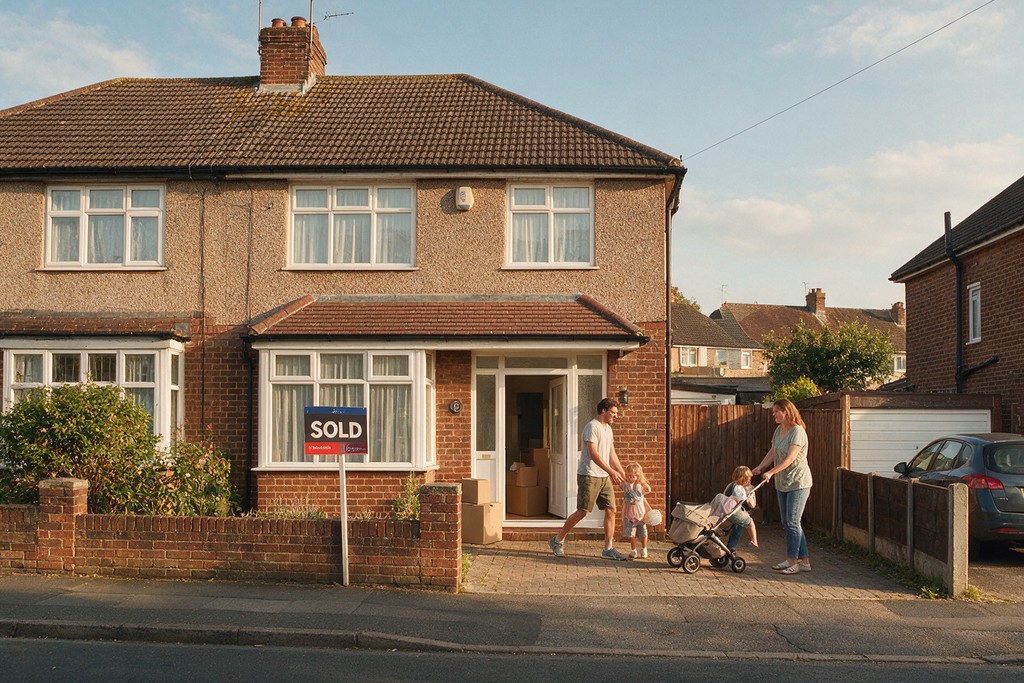
Porting Carries Your Rate Across — But Only If You Still Qualify
Porting carries your existing mortgage rate across to a new property instead of breaking the deal and starting fresh. On paper it looks like the obvious move whenever a fixed rate still has time left to run. In practice, porting comes with conditions that trip up plenty of homeowners mid-move.
What Porting Actually Means
Your old rate does not just follow you automatically. Your lender re-underwrites the whole thing — the new property, your income today, your outgoings today — and only then lets the original rate carry across, rather than switching you onto whatever it is offering new customers. Think of it less as moving house with the same mortgage and more as a fresh application that happens to keep your old pricing if it is approved.
Why Porting Matters When You Have a Good Fixed Rate
If you locked in a rate back when pricing was considerably lower than it is now, porting sidesteps the early repayment charge you would otherwise owe for breaking the deal, and keeps that old rate running instead of resetting you onto today’s market pricing — run your own numbers through our refinance calculator to see what the gap is really worth.
The Catch: You Still Have to Requalify
Staying with the same lender does not make porting automatic. The lender reassesses affordability under its current criteria, against your income and outgoings as they stand right now — even though the rate on offer is an old one. Income dropped? Debts gone up? New property does not meet what the lender currently wants to see? Any of those can get a port declined, on a mortgage you already hold — the same way a lender works out what you can afford on a brand new application.

Porting and Borrowing More
Moving somewhere more expensive than the place you are selling? Most lenders will let you keep the existing balance at your old rate and add a separate loan for the difference. That extra portion gets priced at whatever the lender is currently charging new borrowers, so you end up with a blended rate rather than your original rate straight through.
When Porting Does Not Work and What the Alternative Looks Like
Porting can fall apart for a few reasons: the sale and purchase dates do not line up with how long the lender takes to process a port; the new property does not fit the lender’s current criteria; or the porting terms themselves turn out more restrictive than expected. When that happens, remortgaging to a different lender is usually the fallback. It can mean an early repayment charge — but the numbers sometimes still work out better than forcing through a port that was never going to fit.

The Practical Timeline for Porting
Apply to port before you exchange contracts on the sale, or get too deep into the purchase — a declined port late in the process leaves very little room to arrange something else. Get a decision in principle early, and run the porting application alongside the sale and purchase rather than after either one. That is what gives you room to react if something does not go to plan.
Frequently Asked Questions
Does porting a mortgage affect my credit score?
Porting involves a fresh credit check and affordability assessment, since the lender is re-underwriting you — so yes, it can show up on your file much like any new mortgage application would.
Can I port my mortgage if I am borrowing more for the new property?
Usually. The ported portion keeps your original rate; the additional amount gets its own rate at today’s pricing, and you end up on a blend of the two across the full loan.
What happens if my porting application is declined?
Your options are generally to remortgage elsewhere instead, which may bring an early repayment charge, or to hold off on the move until your circumstances better fit what the lender wants to see.
Can I port a mortgage onto a property with a different lender?
No — porting is specific to your existing lender. It is about carrying your current deal to a new property, not transporting the mortgage itself somewhere else.
Is there a fee to port a mortgage?
Often there is little or no fee for the port itself, but if you are borrowing more, the additional loan portion can carry its own arrangement fee, and a fresh valuation is usually required on the new property regardless.
How long does porting a mortgage usually take?
It varies by lender, but a port typically takes a similar amount of time to a standard mortgage application — often several weeks once you have submitted everything. That is exactly why applying early in your sale and purchase timeline matters so much.
UK Mortgage Broker is a whole-of-market broker helping clients throughout the UK and globally to secure funding on UK property. We are directly authorised and regulated by the Financial Conduct Authority. Your home may be repossessed if you do not keep up repayments on your mortgage.
Call: +44 1628 969 500 Email: info@uk-mortgagebroker.co.uk
Related Pages
- Remortgaging Early: When It Works and When It Backfires – when remortgaging ahead of your fixed-rate end date makes sense — and when it does not.
- What Are ERCs in UK Mortgages? – how early repayment charges work and when porting avoids them.
- When Mortgage Deals Fall Through After an Agreement in Principle – what happens if your new application does not complete.
- Fixed vs Tracker Mortgages in 2026 – how to weigh a ported fixed rate against current tracker pricing.