

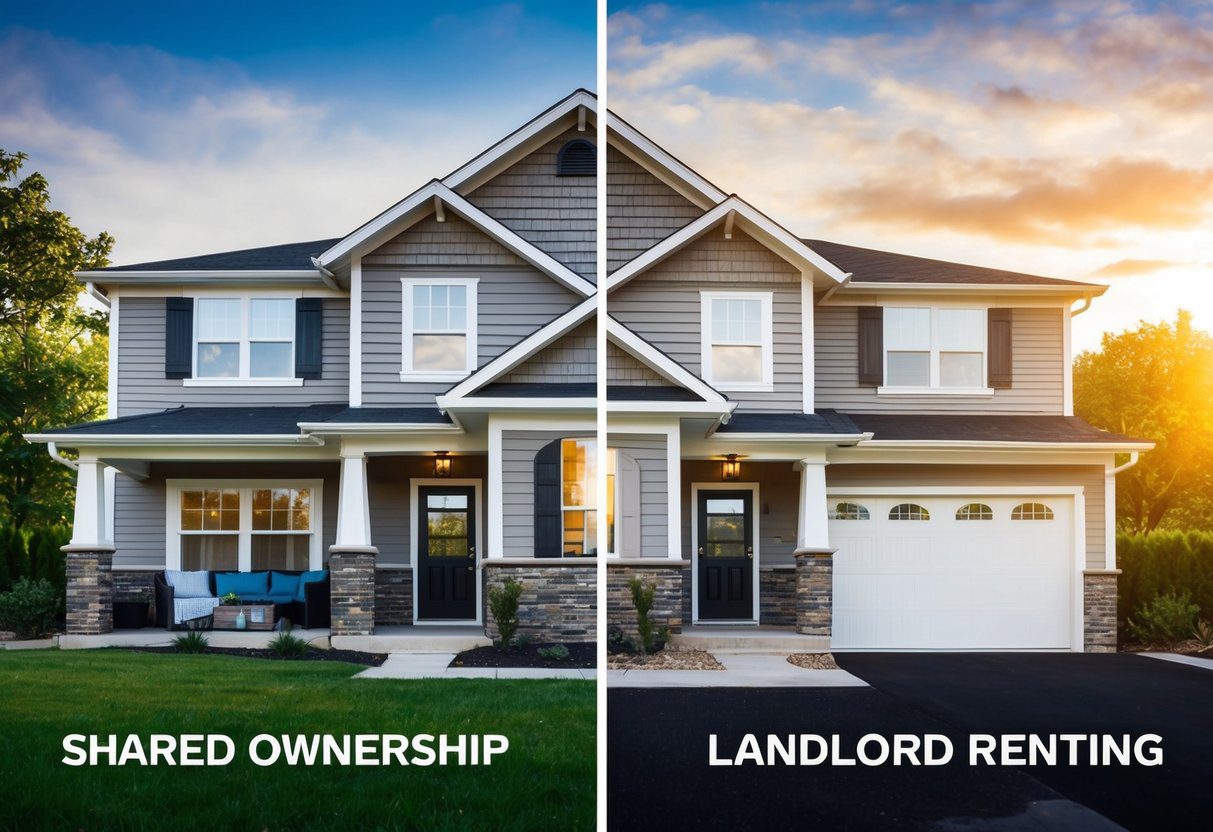
Looking for an affordable way to secure your future? Many people feel stuck between the traditional paths of renting or buying a home outright. But there is a middle option that might be perfect for your situation.
Shared ownership offers first-time buyers a more accessible route onto the property ladder compared to renting, allowing you to purchase a portion of a property while paying rent on the remainder. This scheme bridges the gap between renting and full homeownership, making it particularly appealing for those who struggle to save a large deposit or qualify for a conventional mortgage.
While renting provides flexibility, it offers no equity building. Shared ownership combines aspects of both worlds: you gain the security of owning part of your home whilst potentially paying less than you would in rent alone. With options to part buy, part rent and increase your share over time, it could be the stepping stone needed to achieve full home ownership.
Understanding Shared Ownership

Shared ownership represents a middle ground between renting and full homeownership. This scheme allows buyers to purchase a portion of a property while paying rent on the remainder, making homeownership more accessible to those who cannot afford to buy outright.
How Shared Ownership Works
Shared ownership involves purchasing a share of a property, typically between 25% and 75% (and as low as 10% on newer schemes), from a housing provider while paying rent on the portion you do not own. You will need a shared ownership mortgage for your share and a deposit that is usually 5% to 10% of the share value, not the entire property price.
For example, if you buy a 25% share of a £300,000 property, you would need a mortgage for £75,000 and might pay a deposit of around £7,500.
Each month, you will pay:
- Mortgage payments on your share
- Subsidised rent to the housing provider on the remaining portion
- Service charges for maintenance of communal areas
The property is usually leasehold, meaning the housing provider serves as your landlord for the portion you do not own.
Pros and Cons of Shared Ownership
Advantages:
- Lower deposit requirements than traditional homebuying
- Monthly costs often cheaper than private renting
- Opportunity to build equity in the property
- Security of tenure compared to private renting
- Ability to decorate and personalise your home
Disadvantages:
- Still paying rent alongside mortgage payments
- Responsible for repairs and maintenance despite only owning a share (newer model leases include a ten-year period in which the provider covers certain essential repairs)
- Potentially difficult to sell shared ownership properties
- Service charges can increase unexpectedly
- Some restrictions on what alterations you can make
Some critics describe it as “all the disadvantages of renting combined with all the disadvantages of owning”.
Process of Staircasing
Staircasing refers to the process of increasing your ownership share over time. Most shared ownership schemes allow you to purchase additional shares when you can afford to, eventually leading to full ownership if desired.
The price of additional shares is based on the property’s current market value, not the original purchase price. This means if property values increase, so will the cost of additional shares.
Steps for staircasing typically include:
- Notifying your housing provider of your intention
- Arranging a RICS valuation of the property
- Securing additional mortgage funding or savings
- Completing the legal process to increase your share
Each staircasing transaction involves legal and valuation fees. Older leases usually require a minimum purchase of 10% additional equity at a time, while newer model leases allow you to buy as little as 1% a year for the first 15 years, though policies vary.
The Pros and Cons of Renting
Renting provides a common housing solution with distinct features that impact your lifestyle and finances. Understanding how tenancy works and weighing its benefits against limitations helps determine if renting aligns with your current situation.
The Basics of Tenancy
Renting involves a legal agreement between a tenant and landlord where you pay a monthly fee to occupy a property. Since May 2026, most private tenancies in England are periodic assured tenancies under the Renters’ Rights Act, with no fixed term: tenants can leave with two months’ notice and landlords can only end a tenancy on specific legal grounds.
Your tenancy agreement outlines key terms including rent amount, payment dates, deposit requirements and notice periods. Landlords usually request references and credit checks before approving tenancy.
With renting, you do not need to worry about property maintenance costs. Your landlord bears responsibility for structural repairs and often handles appliance issues.
Most rentals require a security deposit, capped at five weeks’ rent for most tenancies, which must be protected in a government-approved scheme. This money covers potential damages beyond normal wear and tear.
Advantages and Disadvantages of Renting
Pros of renting:
- Flexibility: easier to relocate for career opportunities or lifestyle changes
- No responsibility for major repairs or maintenance costs
- No property value risks during market downturns
- Lower initial costs compared to buying (no large deposit or legal fees)
- Access to amenities and locations that might be unaffordable to buy
Cons of renting:
- Building no equity or ownership in the property
- Limited security, with annual rent increases and the possibility of the landlord selling
- Restrictions on decorating or personalising your space
- Monthly payments that may exceed mortgage costs in some areas
Renting works particularly well for those needing short-term accommodation or who value flexibility. However, the lack of long-term investment return remains a significant drawback compared to ownership options.
Financial Implications

Understanding the money side of housing choices can help you make smarter decisions. When comparing shared ownership and renting, several key financial factors come into play that affect both your immediate budget and long-term wealth.
Initial and Ongoing Costs
The upfront cost difference between these options is significant. Renting typically requires a deposit of up to five weeks’ rent, plus the first month’s payment. This might total £2,000 to £3,000 for an average property.
Shared ownership demands a larger initial commitment. You will need a deposit (usually 5% to 10% of your share), solicitor fees, mortgage arrangement fees, and possibly stamp duty. For a 25% share of a £250,000 property, expect to pay £4,000 to £8,000 upfront including fees.
Ongoing costs differ too. Renters pay monthly rent and utilities, with possible annual increases. Shared owners pay:
- Mortgage repayments on their share
- Rent on the remaining portion
- Service charges for maintenance
- Buildings insurance
Mortgage Repayments and Rent
With shared ownership, your monthly outgoings usually include both mortgage repayments and rent. The mortgage covers your owned percentage, whilst rent is paid on the remainder.
Many find that shared ownership offers more financial stability as mortgage rates can be fixed, providing predictable payments. Monthly costs may be lower than private renting in many areas, especially in expensive housing markets.
For example, a 25% share of a £250,000 flat might cost around £300 to £350 in mortgage payments plus £400 to £500 in rent, potentially less than the £900 to £1,100 rental cost for an equivalent property. A borrowing calculator will show you what your share could stretch to.
The Impact on Credit Score
Both housing options affect your credit profile differently. Renting rarely improves your credit score directly, as most landlords do not report regular payments to credit agencies. However, consistent rent payments demonstrate financial reliability.
Shared ownership involves a mortgage, which significantly impacts your credit score. Making regular mortgage payments boosts your score over time, potentially improving your access to other financial products.
Missing payments on either option damages your credit score, but mortgage defaults have more serious consequences than rental arrears. Mortgage approval requires credit checks, so shared ownership might be challenging for those with poor credit histories.
Comparing Stability, Flexibility, and Security
When choosing between shared ownership and renting, understanding how each option affects your daily life and future plans is crucial. The stability of building equity competes with the flexibility of renting, while security considerations differ significantly between the two paths.
The Stability of Owning a Home
Shared ownership offers significant stability advantages over renting. When you purchase a portion of a property through shared ownership, you are securing your future in that location rather than being subject to a landlord’s decisions.
Staircasing opportunities allow you to gradually increase your ownership percentage as your finances improve. This creates a clear path to full ownership that renting simply cannot provide.
Your monthly payments contribute to your own investment rather than someone else’s property portfolio. This builds equity over time, something renters miss out on entirely.
Many shared owners report feeling more settled and connected to their communities. The psychological benefit of knowing you partially own your home provides peace of mind that rental properties rarely offer.
Flexibility in Renting
Renting offers greater flexibility for those whose circumstances might change. With no fixed term on most tenancies, it is easier to relocate for career opportunities or personal reasons.
There are fewer responsibilities with renting. Most maintenance issues remain the landlord’s obligation, freeing you from unexpected repair costs and the stress of organising repairs yourself.
For those uncertain about their long-term plans, renting avoids the commitment of a mortgage and property ownership. This can be particularly valuable for young professionals or those who might need to relocate.
The initial costs of renting are also considerably lower. You will typically need only a deposit and first month’s rent rather than a mortgage deposit and legal fees.
Security Considerations
Shared ownership provides greater security compared to renting. As long as you keep up with mortgage payments and do not fall into rent arrears, you have full rights as an owner-occupier with lease terms typically ranging from 125 years on older leases to 990 years under the newer model.
Renters face potential instability through:
- Rent increases, which the landlord can propose once a year
- Possibility of eviction when the landlord decides to sell
- Limited control over home improvements or modifications
Shared owners, however, must navigate certain restrictions. Most leases require permission for major alterations, and selling a shared ownership property involves specific procedures that can limit your options.
Financial security differs too. Homeowners build equity but face responsibility for repairs, while renters avoid maintenance costs but build no property wealth.
Making the Right Choice for Your Future
Choosing between shared ownership and renting impacts both your immediate housing situation and long-term financial health. The right choice depends on your personal circumstances, goals and financial position.
Factors to Consider Before Deciding
Financial readiness. Can you afford the initial costs? Shared ownership requires a smaller deposit than traditional buying, but still more than renting. Compare the monthly picture too: shared ownership usually means mortgage, rent and service charge, while renting has just rent and sometimes service charges. Our guide to mortgage affordability explains how lenders will assess you.
Long-term goals. Consider your five-year plan. Shared ownership makes more sense if you want to stay put, while renting offers more flexibility if you might relocate.
Responsibility level. With shared ownership, you are responsible for maintenance of your home, whereas landlords handle repairs in rental properties. This means additional costs but also freedom for personalisation.
Local property market. Housing prices in your area affect value growth potential. New builds through housing associations often offer modern amenities but might come at premium prices.
The Path to Your Dream Home
Stepping stone approach. Shared ownership can be a practical first step on the property ladder. Start with a small share, then increase your ownership through staircasing as finances improve.
Rental flexibility. Renting might be better if you want to experience different areas before committing. It requires no large deposit and allows easier moves between properties.
Building equity vs freedom. With shared ownership, you build equity in a property asset, and the long lease provides long-term security.
Important restrictions. Shared ownership properties typically cannot be sublet, unlike rental properties you can leave when you give notice. Check lease terms carefully before committing.
Frequently Asked Questions
Who actually qualifies for shared ownership?
Fewer restrictions than most people expect.
The headline rule is household income under £80,000 a year, or £90,000 in London, and you cannot already own a home anywhere, or if you do you must be selling it. That is more or less it. You do not have to be a first-time buyer, you do not have to be a key worker, and there is no age limit. Where people fall down is the affordability check the housing provider runs before the mortgage even starts, because they want to see that you can cover the mortgage, the rent and the service charge with something left over each month. I have had a nurse on £31,000 sail through and a sales manager on £58,000 get knocked back because of his car finance. Income is only part of it.
Is shared ownership really cheaper than renting each month?
Often, yes, but run your own numbers rather than trusting the brochure.
Take a 40% share of a £300,000 flat with a 10% deposit on that share. The mortgage on £108,000 at 4.5% over 25 years is about £600 a month. Rent on the 60% you do not own, at the usual 2.75% starting rate, is roughly £412. Add a service charge of £120 or so and you are at £1,130. The same flat rented privately in that part of the market might be £1,300 to £1,500. So yes, cheaper, and £600 of that is going towards something you own. The catch is that the rent goes up every year by inflation plus a bit, and the service charge does whatever it wants.
How much deposit do I need?
Five per cent of your share, not five per cent of the property, and that is the whole point of the scheme.
On a 25% share of a £280,000 house the share is £70,000 and 5% of that is £3,500. Most lenders would rather see 10%, which gets you a better rate and more choice, so £7,000. Put that next to the £14,000 you would need for 5% of the full price and you can see why people go this route. Do budget for the legal work and any mortgage fee on top, and remember stamp duty can apply depending on how you elect to pay it.
Can I sell a shared ownership home, and is it as hard as people say?
You can sell, and it is harder than selling a normal home, though not the horror story you read on forums.
The housing provider usually has a nomination period, typically four to eight weeks, where they try to find a buyer from their own waiting list before you can go to the open market. Your buyer then has to qualify for the scheme themselves and get a shared ownership mortgage, which narrows the pool. In a busy area it sells fine. In a slower market, or on a development with a big service charge, it can drag. If you think you might move within five years I would want to talk that through before you sign.
What happens to the rent as I staircase?
It shrinks in proportion to the share you still do not own, and once you hit 100% it disappears completely.
If you go from 40% to 60% the rent on the remaining 40% is two-thirds of what it was, and your mortgage goes up to cover the extra share. Whether that leaves you better off month to month depends on the rate you can get at the time, which is why we always model the staircasing step before you commit to it. Also worth knowing: on a house, reaching 100% usually means you get the freehold. On a flat you stay leasehold, just without the rent.
Do I need a special mortgage for shared ownership?
Yes, and not every lender does them.
There are a couple of dozen that do, ranging from big high street names to smaller building societies, and they all want to see the housing provider’s paperwork before they will issue an offer. The rate is normally a touch higher than an equivalent standard mortgage at the same loan-to-value, though not dramatically. The bigger difference is in the affordability calculation, because the lender has to count your rent and service charge as fixed commitments. A borrower who could get £150,000 on a normal mortgage might only get £120,000 on a shared ownership one for that reason.
Would I be better off just renting and saving for a normal deposit?
Sometimes. If you can save £800 a month and prices in your area are flat, you will have a 10% deposit on a £250,000 flat in under three years and you will own the whole thing.
That is a better outcome than 25% of it plus rent. Where shared ownership wins is when the saving would take eight years, or when rent is eating so much of your income that saving is not happening at all. I tell clients to think about it as a question of time. If the full deposit is realistically two or three years away, keep renting and save. If it is nowhere in sight, buy the share and start building something.

Speak to a shared ownership mortgage specialist
Not every lender offers shared ownership mortgages, and the ones that do differ on minimum share, deposit and how they treat the rent in their affordability sums. We work with housing providers and lenders on these cases every month and can tell you quickly whether a shared ownership purchase beats carrying on renting for your budget, and which lender will give you the best rate on your share.
UK Mortgage Broker is a whole-of-market broker helping clients throughout the UK and globally to secure funding on UK property. We are directly authorised and regulated by the Financial Conduct Authority.
Your home may be repossessed if you do not keep up repayments on your mortgage.
Call: +44 1628 969 500 Email: info@uk-mortgagebroker.co.uk
Related Pages
- Is Shared Ownership Right for You? – A deeper look at who the scheme suits and who should think twice.
- What to Expect in Shared Ownership – Rent reviews, service charges and the day-to-day reality of a shared ownership lease.
- Case Study: Shared Ownership Mortgage Offer in One Week – How we met a developer exchange deadline for a first-time buyer.
- First-Time Buyer Mortgage Calculator – Estimate what you could borrow and what it would cost each month.
- Residential Mortgages – Whole-of-market advice for main home purchases across the UK.